API & Agents
Script the creative workflow without losing the review boundary.
Turn an approved creative process into a repeatable workflow. APIs, CLI recipes, jobs, webhooks, and trusted local agents connect creation to review and delivery while your team keeps control of the final decision.

API recipe cluster
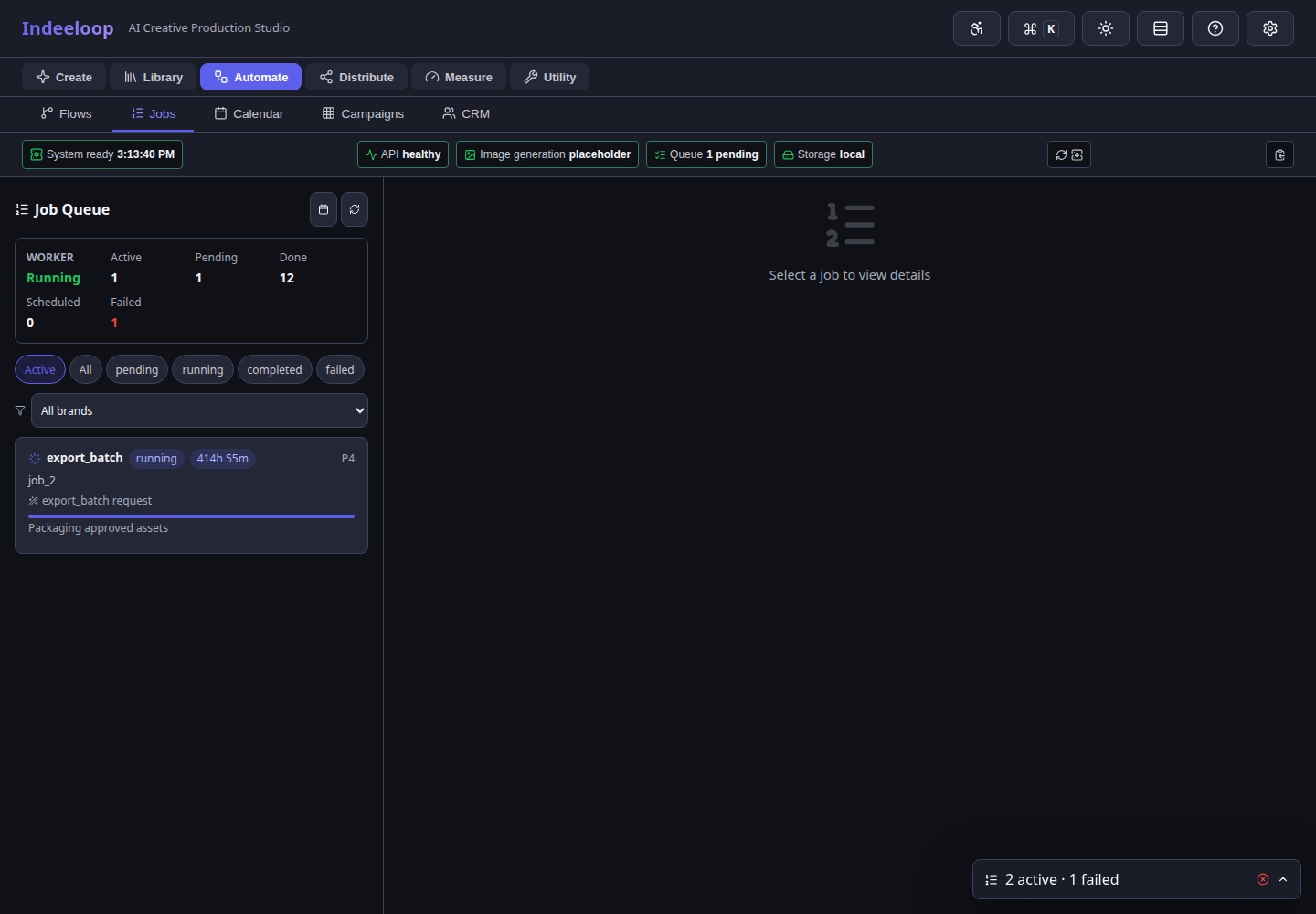
Jobs
Long-running work can be inspected before an API-driven launch depends on it.
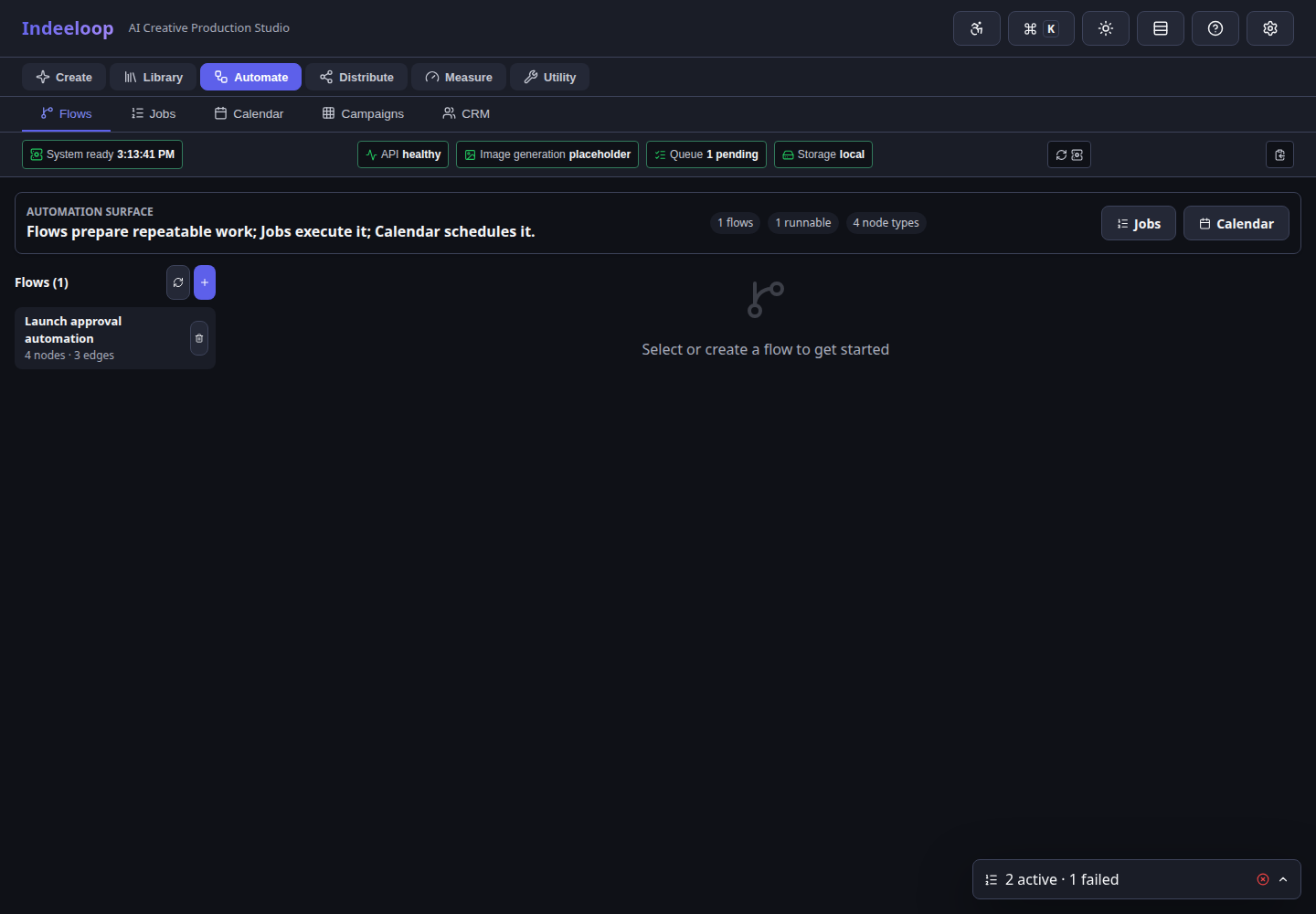 Flows
Agentic workflow steps stay visible before they are run or delegated.
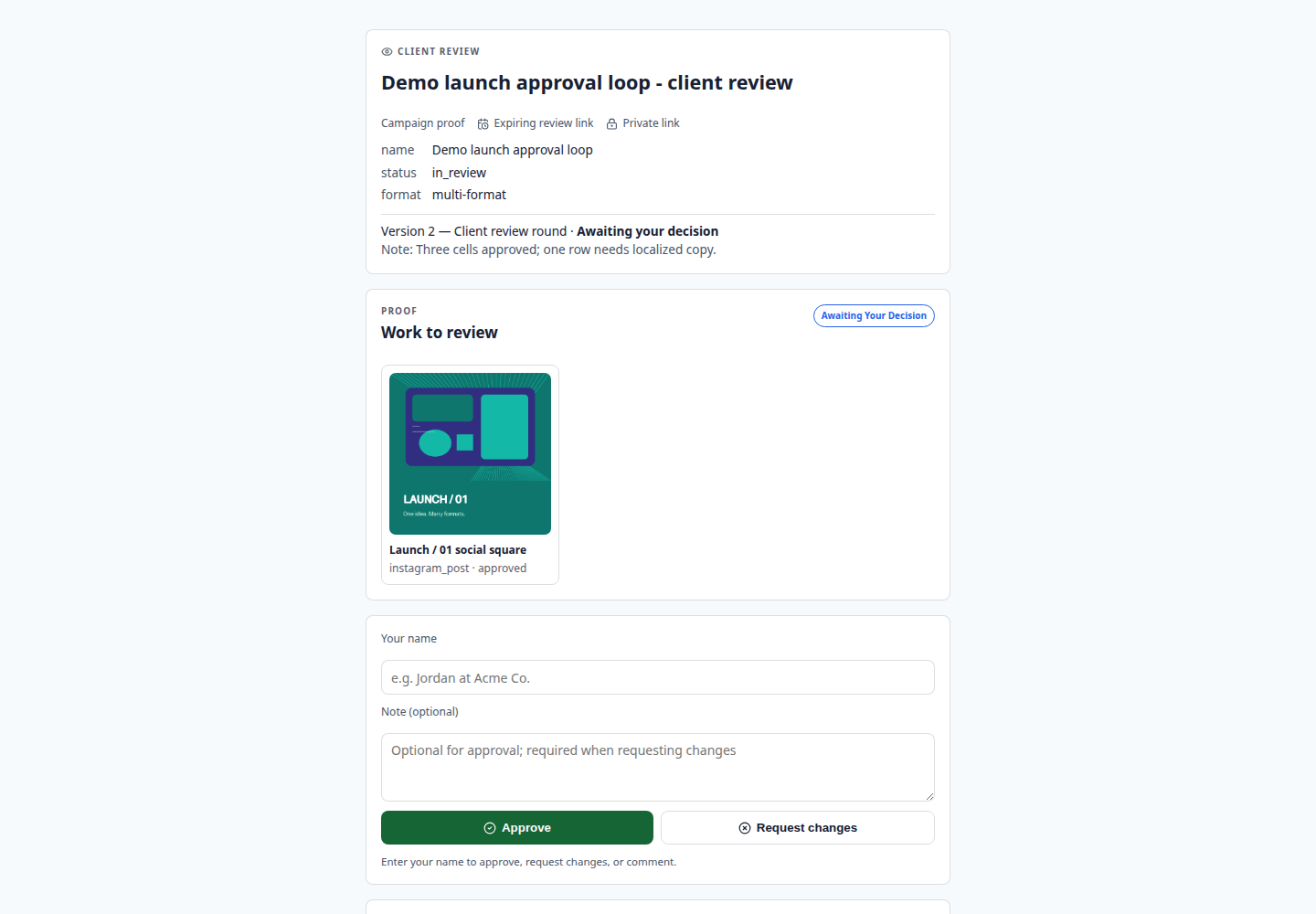 Review API result
API-created review shares resolve into a concrete stakeholder surface.
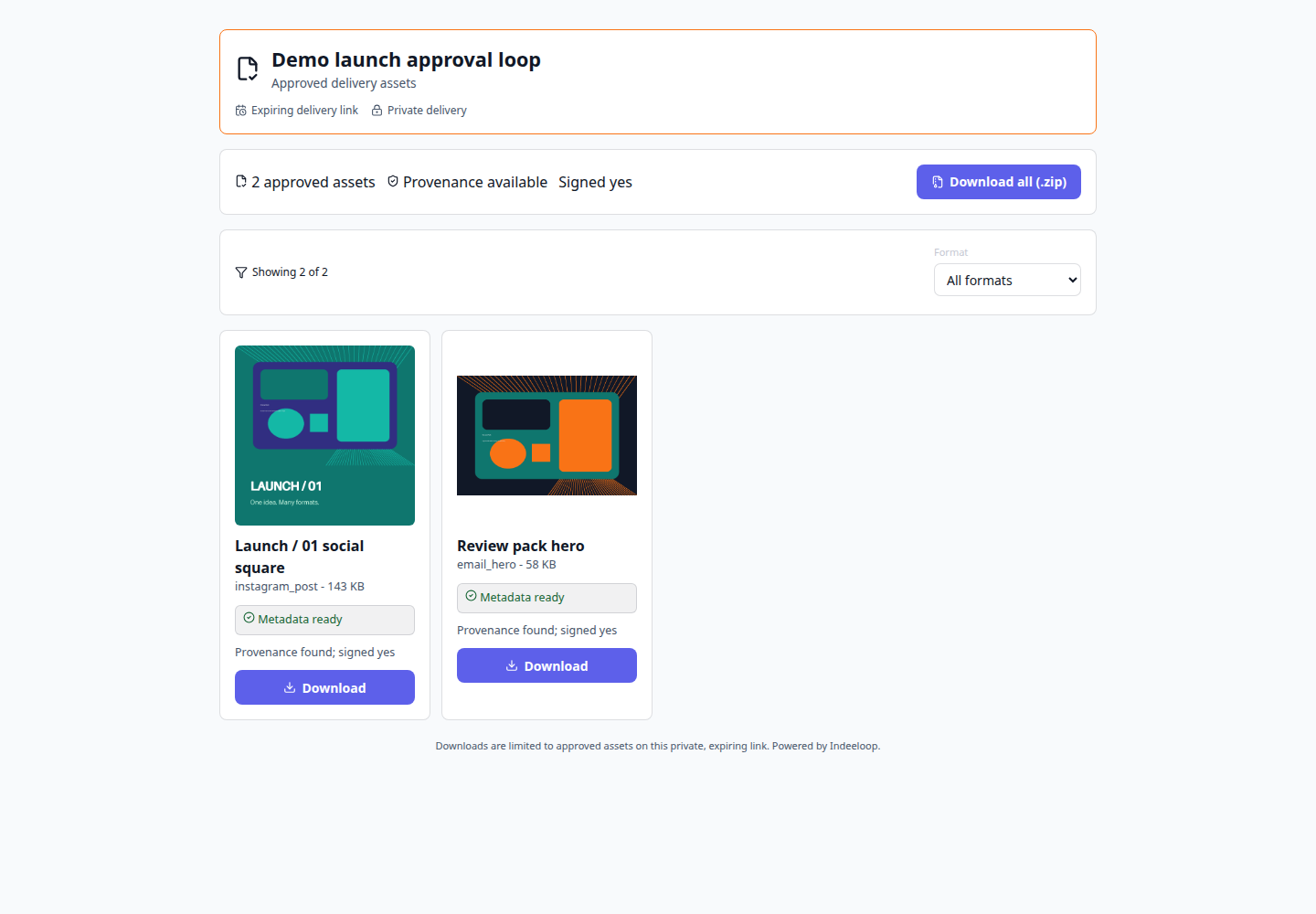 Delivery API result
Delivery routes produce a branded portal with approved files and provenance.
Concrete routes for campaign production and handoff.
Use the UI for daily production, then call repeatable work from your own systems. APIs can create images, render motion, manage jobs and assets, or build a Campaign Matrix when a launch needs many reviewable variants.
A request starts work; Jobs shows its state; review and delivery links show the result. Inspect endpoint schemas in your running environment when you are ready to integrate.
POST /api/generateGenerate one image from a prompt, format, seed, model, source image, or inpainting mask.POST /api/renderRender a YAML template with variables and optional format/model overrides.POST /api/campaign-matrix/{id}/exportPackage approved campaign outputs from a Campaign Matrix.POST /api/review-sharesCreate stakeholder review links for approvals and requested changes.POST /api/jobsSubmit supported long-running work through the job queue and worker status surface.Codify proven launch recipes
Use recipes and job controls to run one approved campaign structure across formats, locales, and data rows.
- Best for: repeatable campaign production.
- Boundary: keep recipes reviewed before they drive a launch.
Build internal tools around the workflow
Use FastAPI routes and Python workflows when another app needs to generate, render, export, inspect jobs, or create handoff links.
- Best for: dashboards, launch tools, and pipeline glue.
- Boundary: mutating routes require authentication once users are bootstrapped.
Delegate bounded local preparation
MCP is a trusted local stdio tool surface. Approved agents can inspect formats, list brands, generate options, prepare documents, and run matrices.
- Best for: local agent-assisted setup and iteration.
- Boundary: do not expose MCP to untrusted clients or networks.
Automation proof points
Observable jobs
Queue state, worker readiness, failed-job retry, and long-running render status turn creative automation into something operators can reason about.
Reusable recipes
YAML, CLI, and Python paths let one proven campaign setup become a script, not a meeting full of manual export instructions.
Bounded local agents
MCP tools can inspect brands, formats, effects, model status, and campaign recipes without handing agents uncontrolled publishing authority.
Delivery APIs
Review shares, delivery portals, export routes, webhooks, and schedule endpoints make the final handoff programmable after approval.
Remote CLI control
Operators can run the same command vocabulary locally or against a hosted API, which keeps automation useful after the app leaves a laptop.
Doctor report
A single CLI report pulls together health, model state, capabilities, worker status, storage proof, security posture, and webhook delivery evidence.
Agentic does not have to mean opaque.
The small operational surfaces matter because they let teams automate the boring parts while still inspecting state, failures, assets, and approvals.
Make the repeatable parts programmable.
Start with a campaign that works in the UI, then promote the durable pieces into recipes, API calls, Python workflows, or local agent tools.